Brazilian Jiu Jitsu vs Judo: What's the Difference? | Kings Academy
Brazilian Jiu Jitsu and Judo share the same roots but train very differently. Learn the key differences in throws, groundwork, rules and belts, and which suits you.
Brazilian Jiu Jitsu vs Judo: What's the Difference?
Brazilian Jiu Jitsu (BJJ) and Judo are both grappling martial arts trained in a gi, and they share the same Japanese roots. The biggest difference is focus. Judo is built around throwing your opponent to the ground, while Brazilian Jiu Jitsu is built around what happens once you get there - controlling your opponent on the ground and finishing with a submission.
If you're trying to decide between the two, this guide explains where they came from, how they differ in training, rules and belts, and which one is likely to suit your goals.
Where Brazilian Jiu Jitsu and Judo Come From
Judo was founded in Japan in 1882 by Jigoro Kano, who developed it from older styles of Japanese jujutsu. Kano kept the techniques that could be practised safely at full intensity and organised them into a system of throws, pins, chokes and armlocks.
In the early 1900s, Judo expert Mitsuyo Maeda travelled the world teaching and competing, eventually settling in Brazil. There he taught Carlos Gracie, and the Gracie family went on to refine the ground fighting side of the art, adapting it so that smaller, weaker people could defend themselves against bigger opponents using leverage and technique. That art became Brazilian Jiu Jitsu.
So the two arts are close relatives. Over the last century, though, they have developed in very different directions.
The Key Differences Between Brazilian Jiu Jitsu and Judo
1. Standing vs ground
Judo puts most of its emphasis on standing grappling. Students spend a large part of every class learning grips, balance-breaking and throws, with the aim of putting an opponent flat on their back.
Brazilian Jiu Jitsu spends most of its time on the ground. Takedowns are taught, but the heart of BJJ is positions such as the guard, side control, mount and back control, and the escapes, sweeps and submissions that go with them.
2. How you win
In Judo competition, a clean, powerful throw that lands your opponent on their back (ippon) can win the match outright. You can also win with a pin held for a set time, with a sbumission, or points if no ippon throw, pin, or submission.
In Brazilian Jiu Jitsu competition, a throw or takedown scores points, but it does not end the match. Points are also scored for sweeps, passing the guard, kneeride, mount and taking the back. The main goal is a submission, such as a choke, armlock or leg lock, which ends the match immediately. If there is no submission, then the match goes to points to determine the winner.
3. Time on the ground
Judo rules limit groundwork. If neither player is making progress on the ground (20 secs), the referee stands them back up. This keeps the focus on throwing rather than newaza (ground work).
In Brazilian Jiu Jitsu there is no such limit on the ground. A whole match can be fought on the ground, and many matches start with one player pulling guard - deliberately sitting to the mat to begin from the bottom position. That would make no sense in Judo, but it is a normal strategy in BJJ.
4. Submissions allowed
Judo allows chokes and armlocks only. Brazilian Jiu Jitsu allows a much wider range of submissions, including wrist locks, and leg locks at higher belt levels. This gives BJJ a deeper and more varied game on the ground.
5. Gi and No-Gi
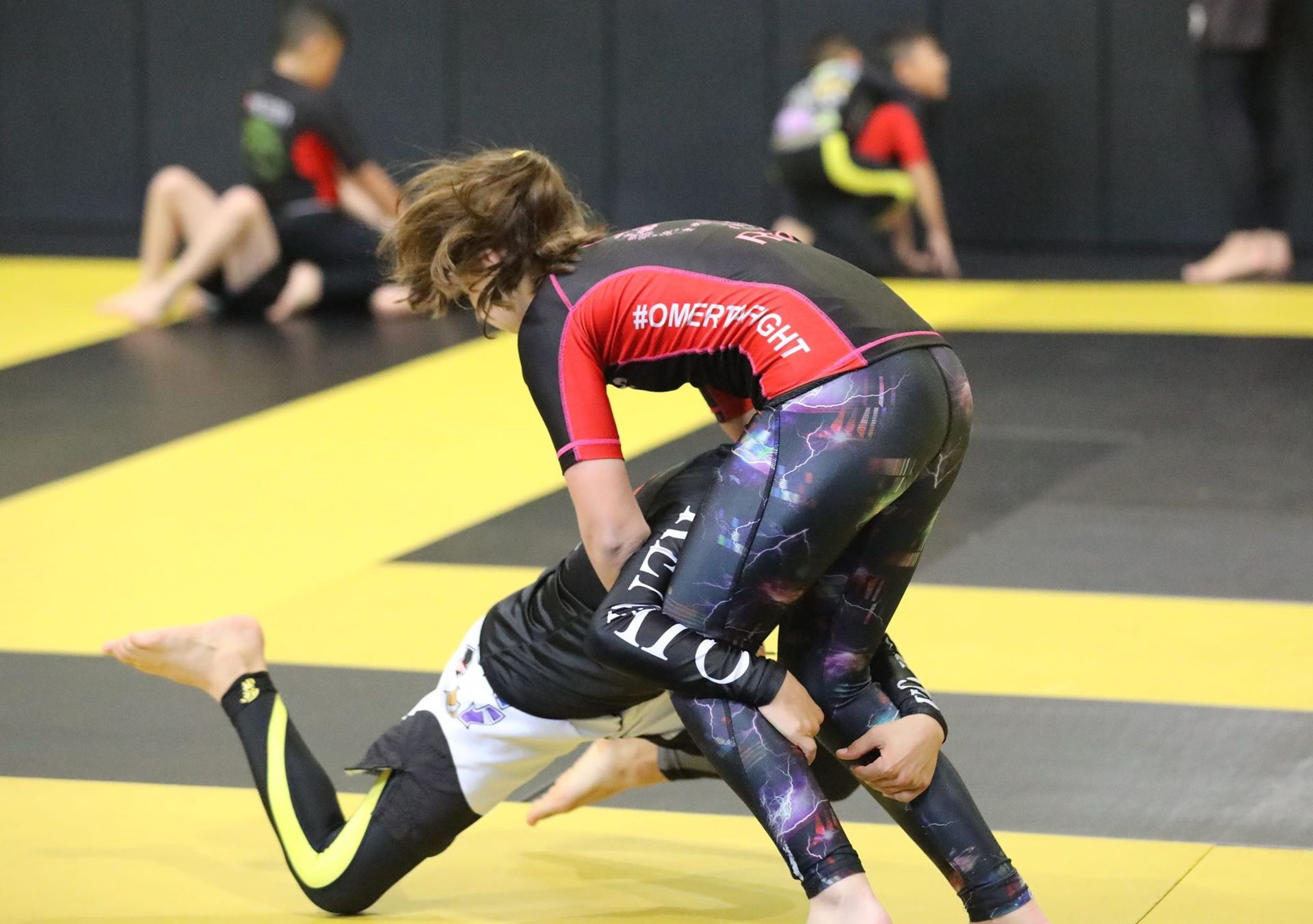
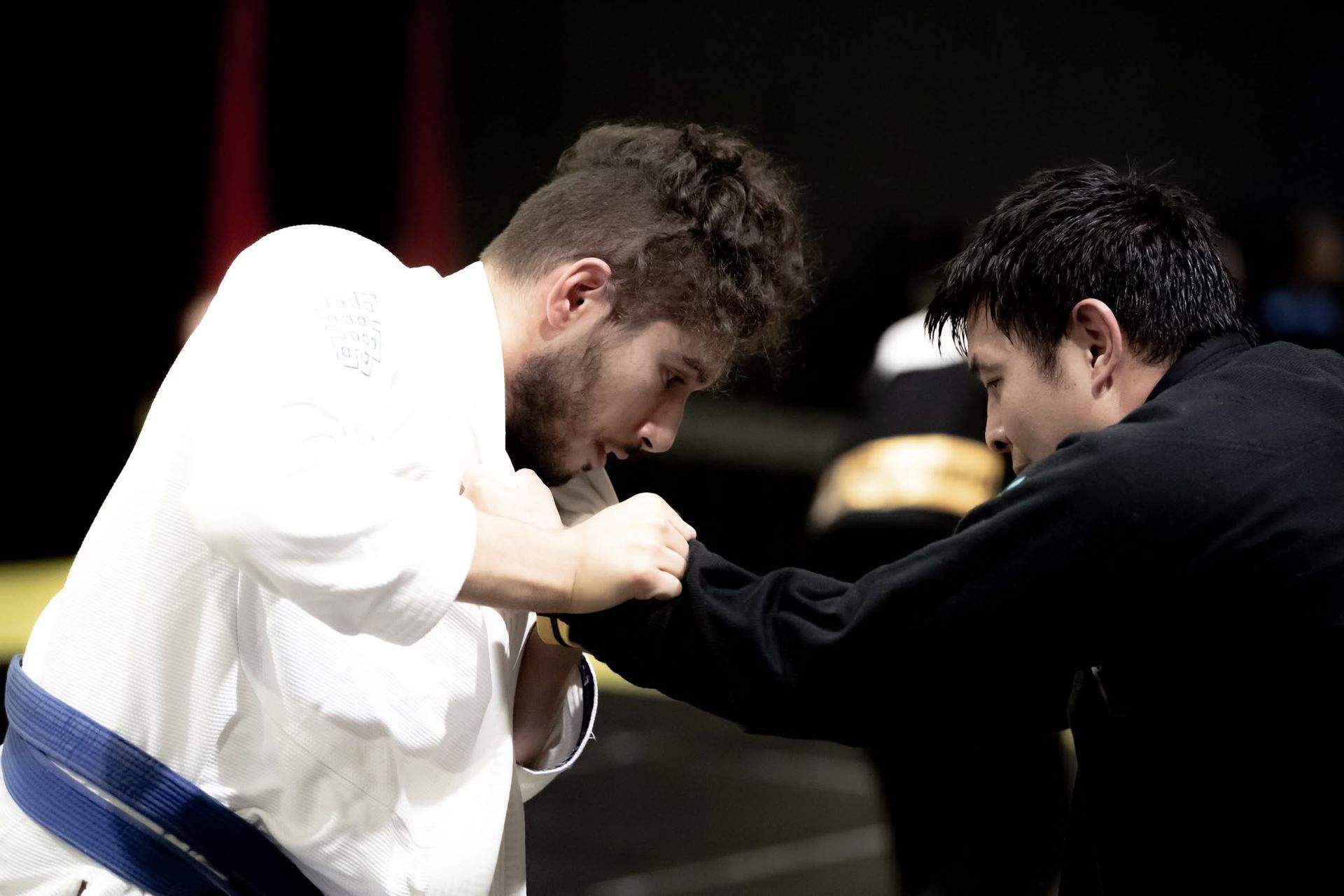
Judo is always trained in a judogi. Brazilian Jiu Jitsu is trained both in the gi and without it (No-Gi), in a rashguard and shorts. No-Gi training is faster, relies less on grips and carries over directly to Mixed Martial Arts (MMA) and real-world self-defence where your opponent isn't wearing a jacket. At Kings Academy we run separate Gi and No-Gi syllabi, so you can train one or both.
6. Belts and progression
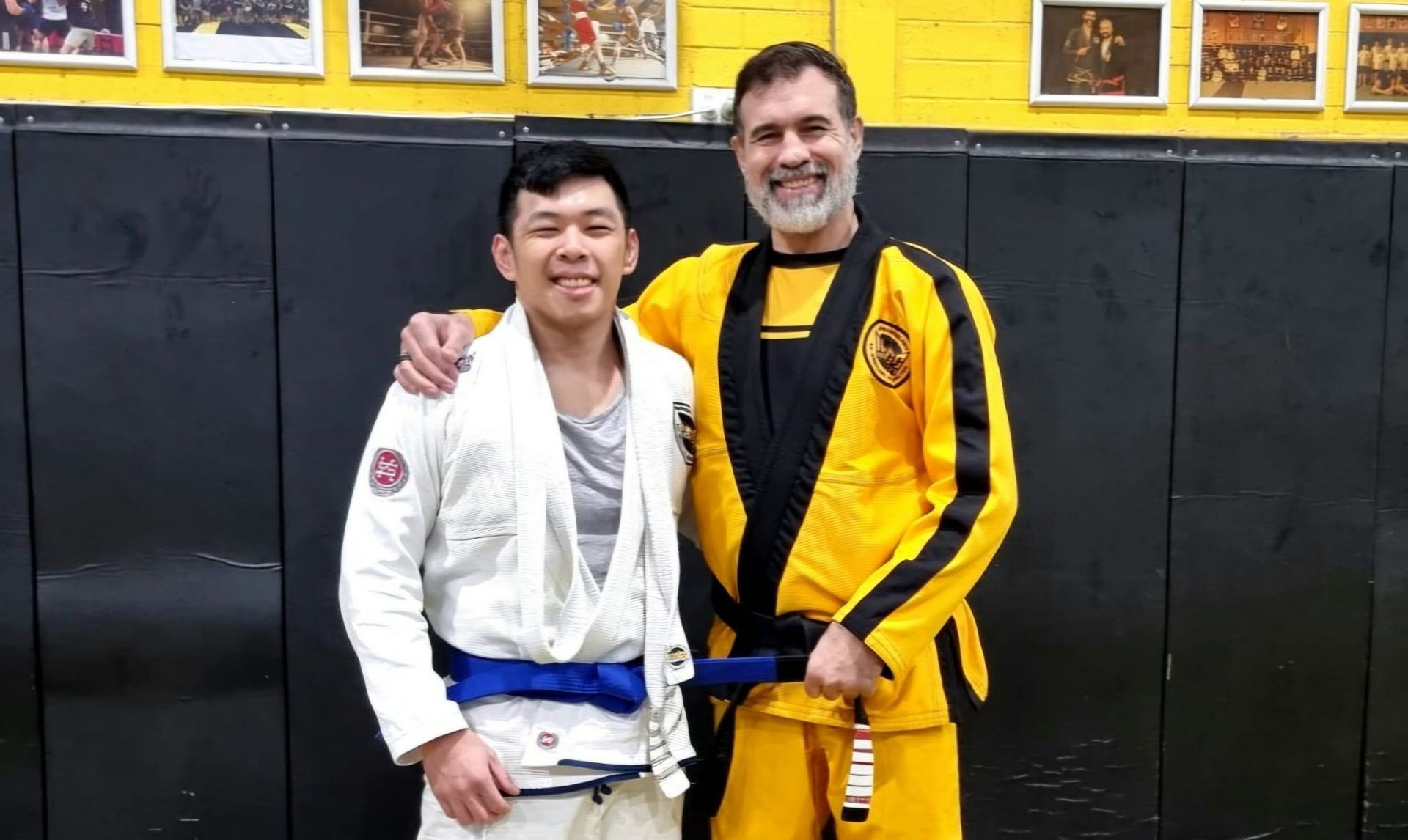
Both arts use coloured belts, but Brazilian Jiu Jitsu is known for slow, earned progression. A BJJ black belt typically takes around ten years of consistent training. At Kings Academy, students progress through the IBJJF belt system, earning stripes along the way, so there is always a clear next goal. You can read more in our guide to Getting Your Blue Belt (and Beyond).
7. Olympic sport vs open competition
Judo has been an Olympic sport since 1964, and its rules are shaped by Olympic competition. Brazilian Jiu Jitsu is not an Olympic sport, but it has a huge international competition scene through organisations such as the IBJJF, with events for every age, belt and weight division, including masters divisions for adults over 30. There are moves to have BJJ introduced to the Olympics through the JJIF. BJJ could one day be an Olympic sport.
Which Is Better for Self-Defence?
Both arts teach you how to handle someone who grabs you, and both are far more realistic than styles that never pressure-test their techniques.
Judo's strength is in the first few seconds. A good throw can end a confrontation quickly, and Judo players are very hard to knock off their feet.
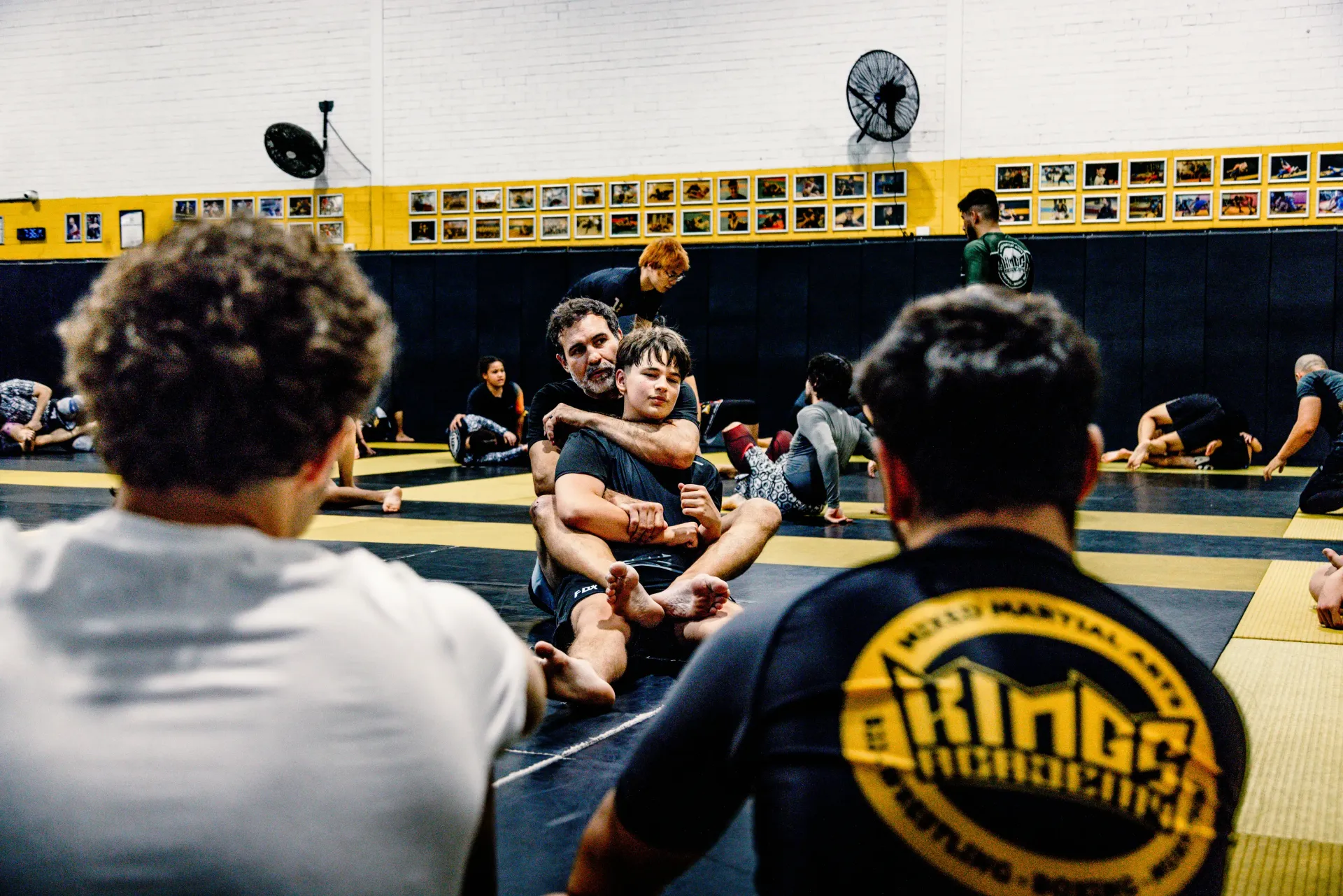
Brazilian Jiu Jitsu's strength is what happens if the fight goes to the ground, which many real confrontations do. BJJ teaches you how to get up safely, how to escape from underneath a bigger person, and how to control someone without needing to strike them. This is a big reason BJJ is so popular with women, parents, security staff and law enforcement. You can read more in our article on Why BJJ Is the Smartest Self-Defence Choice for All Ages.
For the most complete grappling game, many people combine Brazilian Jiu Jitsu with Wrestling along with Muay Thai, which builds the strong takedowns and balance that Judo is known for as well as the skills to deal with strikes.
Kings Academy has classes in BJJ, Muay Thai, Wrestling, Boxing, and MMA.
Which Is Better for Kids?
Both arts are excellent for children. They build confidence, discipline, coordination and respect, and they teach kids how to fall safely and control a situation without striking.
Brazilian Jiu Jitsu suits young children particularly well because much of the training happens on the ground, so there is less risk from repeated throws while their bodies are still developing. Grappling also comes naturally to most kids - it feels like structured play-wrestling.
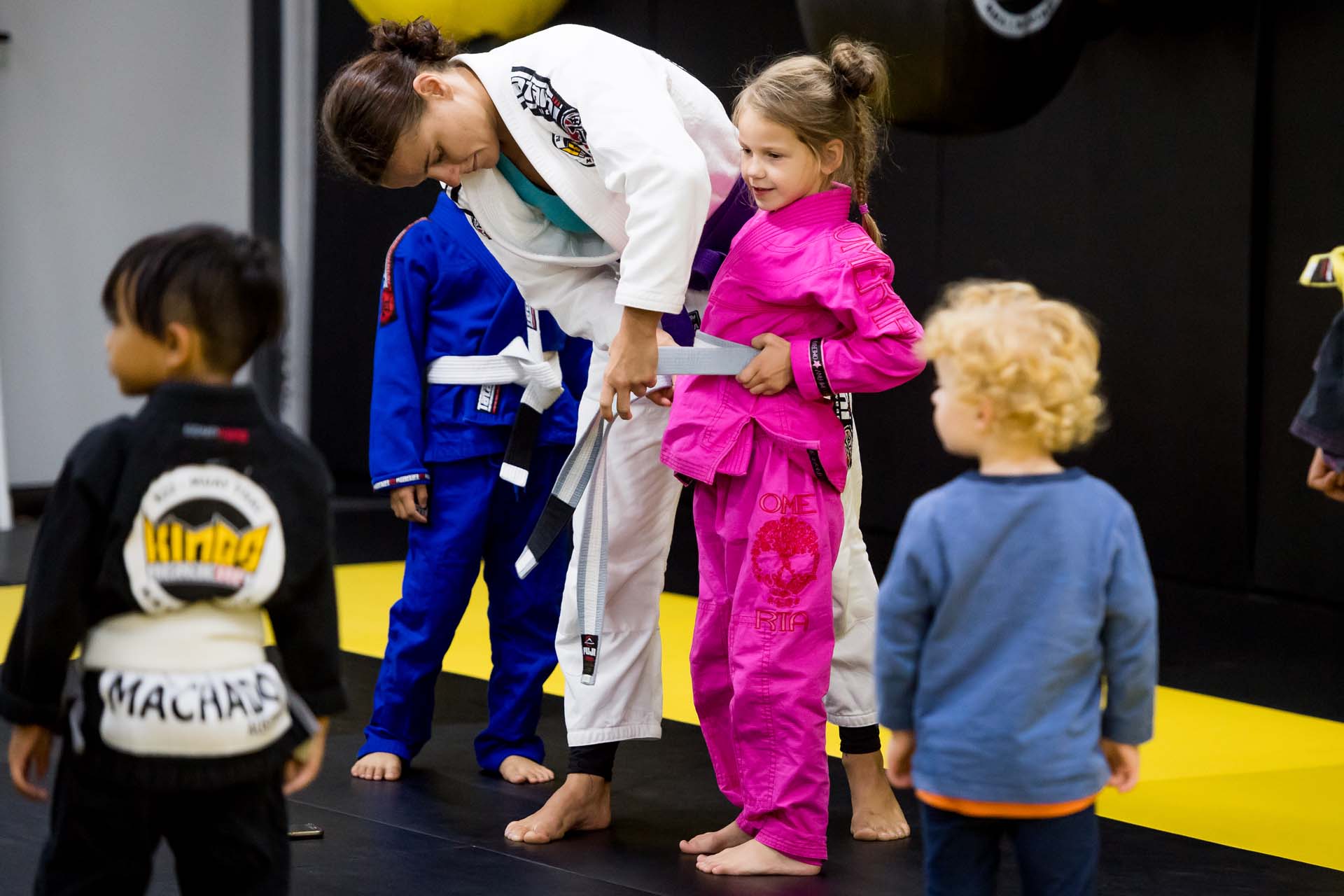
At Kings Academy, Kids Brazilian Jiu Jitsu starts from 3 years of age, with classes for 3-5 year olds, 6-12 year olds and Teens aged 13-15. Teens can also attend our Adults classes, which are open to students aged 13 and up.
Which Should You Choose?
Choose Judo if you mainly want to learn powerful throws, enjoy explosive standing grappling, or are interested in the Olympic pathway.
Choose Brazilian Jiu Jitsu if you want the most complete ground game, a martial art you can train hard at any age without being thrown hundreds of times a week, practical self-defence for any size, and a sport with competition opportunities for kids, adults and masters alike.
Kings Academy does not teach Judo. We specialise in Brazilian Jiu Jitsu, alongside Wrestling, Muay Thai, Boxing and MMA. If throws and takedowns appeal to you, our Wrestling classes are a great complement to your BJJ.
Train Brazilian Jiu Jitsu at Kings Academy
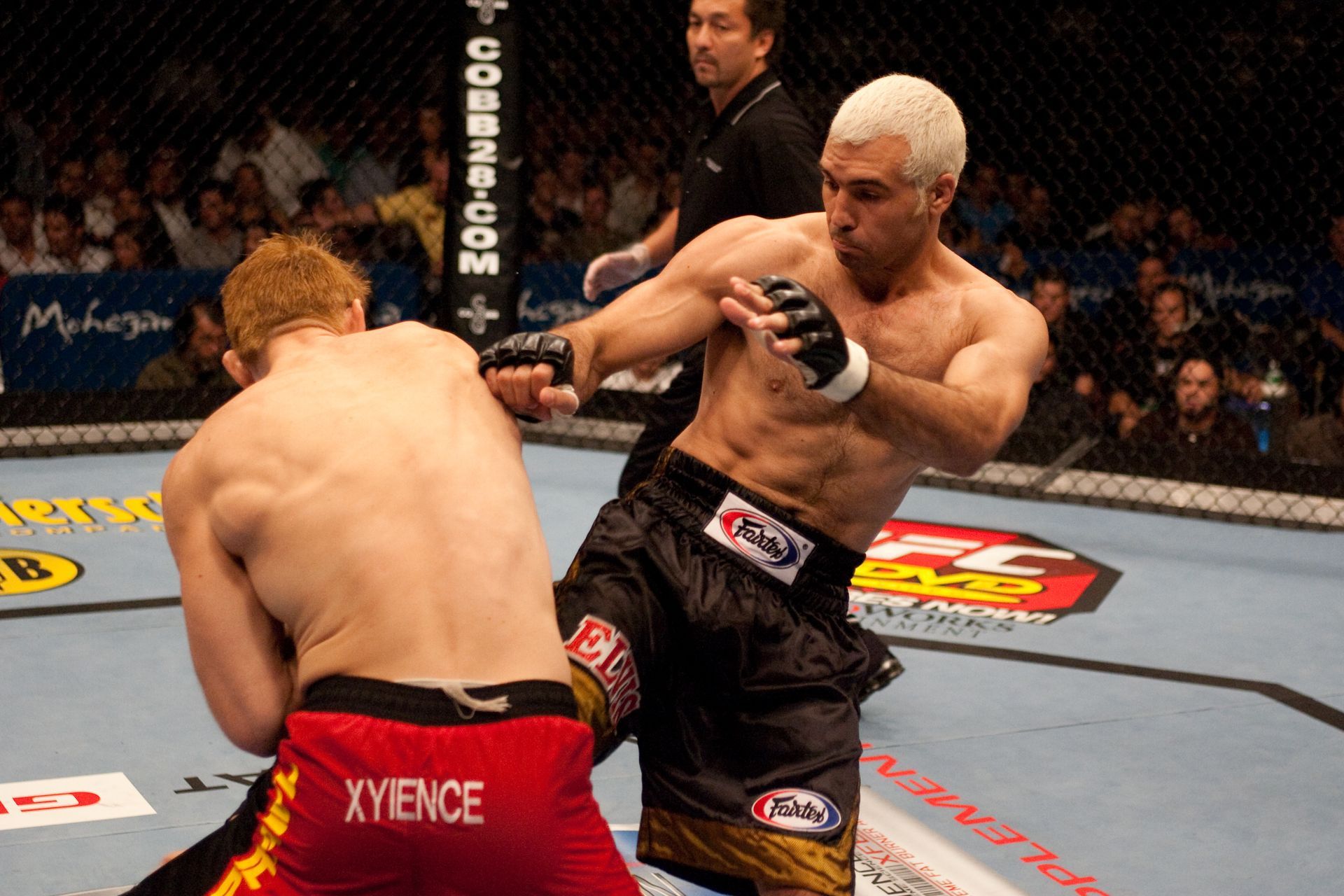
Kings Academy is an official Carlos Machado Jiu Jitsu affiliate, led by UFC veteran and 5th Degree Brazilian Jiu Jitsu Black Belt Elvis Sinosic. We have been teaching Brazilian Jiu Jitsu in South West Sydney since 2002, from our academy at Unit 2/331 Newbridge Road, Chipping Norton, on the Moorebank border.
We run Gi and No-Gi classes for kids, teens and adults, from complete beginners to competitors, in one of Australia's most comprehensive martial arts facilities.
Book your FREE 1 Week Trial and try Brazilian Jiu Jitsu for yourself.
Frequently Asked Questions
Is Brazilian Jiu Jitsu the same as Judo?
No. They share the same roots, but Judo focuses mainly on throws while Brazilian Jiu Jitsu focuses mainly on ground control and submissions. In Judo, a clean throw can win a match outright. In Brazilian Jiu Jitsu, a throw only scores points and the main goal is a submission.
Is Brazilian Jiu Jitsu harder than Judo?
Neither is easier. They are difficult in different ways. Judo demands explosive throwing technique and balance, while Brazilian Jiu Jitsu demands patience, problem-solving and a deep understanding of positions on the ground. A BJJ black belt typically takes around ten years of consistent training.
Can I do Brazilian Jiu Jitsu if I have done Judo before?
Yes. Judo players usually adapt well to Brazilian Jiu Jitsu because their grips, balance and takedowns are already strong. Most of their learning will be on the ground, especially guard work and submissions.
Does Kings Academy teach Judo?
No. Kings Academy specialises in Brazilian Jiu Jitsu (Gi and No-Gi), alongside Wrestling, Muay Thai, Boxing and Mixed Martial Arts (MMA). Our Wrestling classes are a great way to build the throws and takedowns that complement your BJJ.
What age can my child start Brazilian Jiu Jitsu at Kings Academy?
Kids Brazilian Jiu Jitsu at Kings Academy starts from 3 years of age, with classes for 3-5 year olds, 6-12 year olds and Teens aged 13-15. Teens can also attend our Adults classes, which are open to students aged 13 and up.
You can read more about our BJJ program here.
Published: 27 November 2026
Updated: 27 November 2026