Kickboxing vs Muay Thai: What's the Difference?
Muay Thai and Kickboxing are popular combat sports, but what's the difference?
Kickboxing vs Muay Thai: What's the Difference?
By Elvis Sinosic, UFC Veteran & 5th Degree BJJ Black Belt · Published Nov 20, 2026
Quick answer: Muay Thai uses eight weapons: punches, kicks, knees and elbows, plus a full clinch where fighters can hold, knee, elbow, sweep and dump each other. Kickboxing, including K-1 and GLORY rules, uses punches, kicks and knees but bans elbows and limits the clinch to a brief hold for a single knee or strike. That one difference changes everything: the stance, the pace, the training and how fights are won.
"Is kickboxing the same as Muay Thai?" is one of the questions we hear most from new students at Kings Academy. They look similar from the outside. Both are stand-up striking arts, both use gloves, shin kicks and knees, and both are fought in a ring. But step inside a Muay Thai class and a kickboxing class and you'll quickly feel the difference.
This guide explains what each sport is, how they differ in competition and in training, where K-1 fits in, and how to choose the right one for your goals.
What is Muay Thai?
Muay Thai is the national sport of Thailand, known as "the art of eight limbs" because it uses the fists, elbows, knees and shins. It's a centuries-old martial art with deep traditions, including the Wai Kru and Ram Muay, the ritual dance fighters perform before a bout to honour their teachers.
What really sets Muay Thai apart is the clinch. Fighters can tie each other up at close range, control the head and arms, land knees and elbows, and sweep or dump an opponent to the canvas. Fighters who specialise in clinch fighting are called Muay Khao (knee fighters).
What is Kickboxing?
Kickboxing is a broad term for stand-up combat sports that combine punches with kicks. There isn't one single "kickboxing". Different rulesets have developed around the world:
- Full contact (American) kickboxing: punches and kicks above the waist only. No leg kicks, knees or clinching.
- Low kick (international) rules: punches and kicks, including kicks to the legs, but no knees or clinch.
- K-1 rules: punches, kicks and knees, including leg kicks, with a brief clinch allowed for a single knee. No elbows.
- Oriental rules: like K-1, but with more freedom to knee in the clinch.
When most people in Australia talk about kickboxing today, they mean K-1 style kickboxing.
What is K-1?
K-1 is a Japanese kickboxing promotion founded in 1993. Its World Grand Prix tournaments, traditionally held at the Tokyo Dome, made kickboxing a global spectator sport and created the ruleset now used worldwide. The "K" is often said to stand for the striking arts it brought together, such as karate, kickboxing and kung fu.
K-1 rules were designed for fast, knockout-heavy action. Elbows were banned and clinching was cut back so fighters keep striking instead of tying each other up. The style was heavily shaped by Dutch kickboxing, famous for hard punching combinations finished with a low kick.
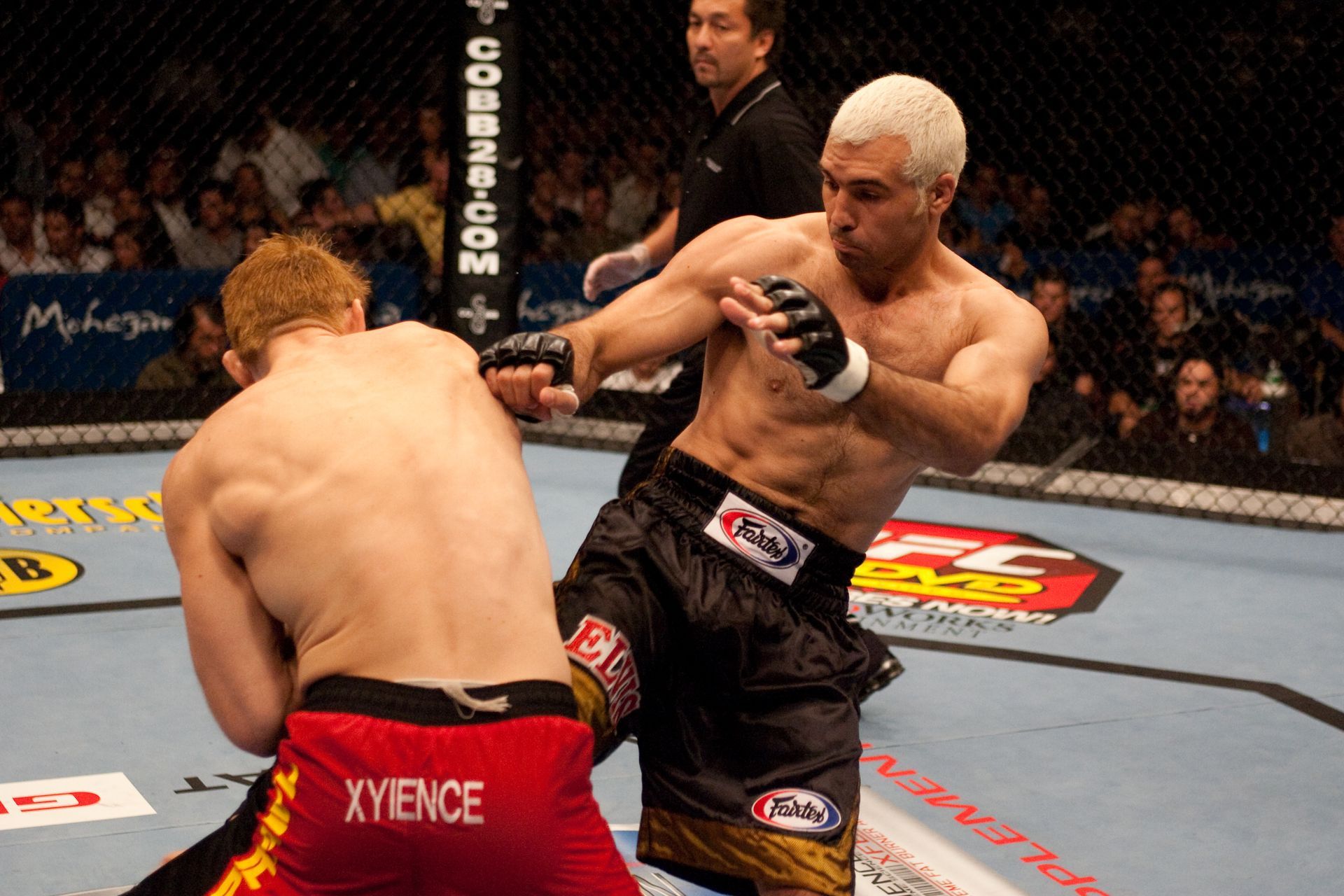
Elvis Sinosic, Kings Academy's Chief Instructor, competed for K-1 during his professional career and was Australia's first K-1 MMA competitor, so the K-1 style is part of our academy's DNA.
What is GLORY?
GLORY, founded in 2012, is now the world's leading kickboxing promotion. Its rules are very similar to K-1: punches, kicks and knees, no elbows, no throws, and only a brief clinch. Since January 2025, GLORY allows only one immediate strike from the clinch before fighters must separate.
Key differences at a glance
Muay Thai
- Weapons: punches, kicks, knees and elbows (8 limbs)
- Clinch: full clinch fighting, with knees, elbows, sweeps and dumps
- Elbows: allowed
- Pace: measured, especially early in the fight, building in the later rounds
- Stance: tall and square, with the lead leg light, ready to check kicks and teep
- Scoring: rewards kicks, knees, elbows, clinch dominance, balance and visible effect
- Pro fight length: usually 5 rounds of 3 minutes
Kickboxing (K-1 and GLORY rules)
- Weapons: punches, kicks and knees (6 limbs)
- Clinch: brief, for one knee or strike only, then separate
- Elbows: not allowed
- Pace: high output from the opening bell
- Stance: more bladed and mobile, with tighter, boxing-style hands
- Scoring: rewards damage, clean strikes and aggression, with punching combinations playing a big role
- Pro fight length: usually 3 rounds of 3 minutes (5 rounds for title fights)
The difference in competition
Competing in Muay Thai
- Fight length: Professional bouts are usually 5 rounds of 3 minutes. In Thailand's famous stadiums, Lumpinee and Rajadamnern, fighters rest 2 minutes between rounds. Many shows outside Thailand use 1-minute breaks, and some televised events use 3 rounds. Amateur bouts are shorter, often 3 rounds of 2 minutes.
- What scores: Clean, powerful kicks, knees and elbows, sweeps, and dominance in the clinch. Under traditional scoring, a kick or knee that visibly affects your opponent counts for more than a flurry of punches.
- How fights unfold: Traditional Muay Thai is judged on the fight as a whole. The opening round is often a feeling-out period, and the action builds through the middle and later rounds.
- Culture: Fighters perform the Wai Kru and Ram Muay before the bout, and composure matters. Showing balance and control, even after taking a strike, impresses the judges.
Competing in Kickboxing
- Fight length: GLORY and K-1 style bouts are usually 3 rounds of 3 minutes, with 5 rounds for title fights. Amateur K-1 bouts are often 3 rounds of 2 minutes.
- What scores: Damage, clean strikes and aggression, scored round by round on a 10-point must system. Knockdowns weigh heavily.
- How fights unfold: With only 3 rounds and no long clinch to rest in, there's no time to settle in. Fighters push the pace from the first bell, and punching combinations into kicks are the core of the game.
- Rules that change the fight: No elbows means fewer cuts and stoppages, and the limited clinch keeps fighters striking at range.
Can a Muay Thai fighter compete in kickboxing?
Yes, and many of the best kickboxers come from Muay Thai. But they have to adapt. Without elbows or a long clinch, a Muay Thai fighter loses some of their best close-range weapons, and the faster pace and heavier boxing exchanges take time to get used to. Kickboxers moving to Muay Thai face the opposite challenge: learning to defend elbows, survive the clinch and stay balanced against sweeps.
The difference in training
The rules shape the training. Here's how a session changes depending on which sport you're preparing for.
Training for Muay Thai
- Clinch work every week: hand fighting for head and arm control, knees, off-balancing, sweeps and dumps. It's demanding, and it builds incredible core and neck strength.
- Elbows: short, sharp elbows from close range, and defending them.
- Kick checking and teeps: a tall, square stance lets you lift your shin to block kicks and use the teep (push kick) to control distance.
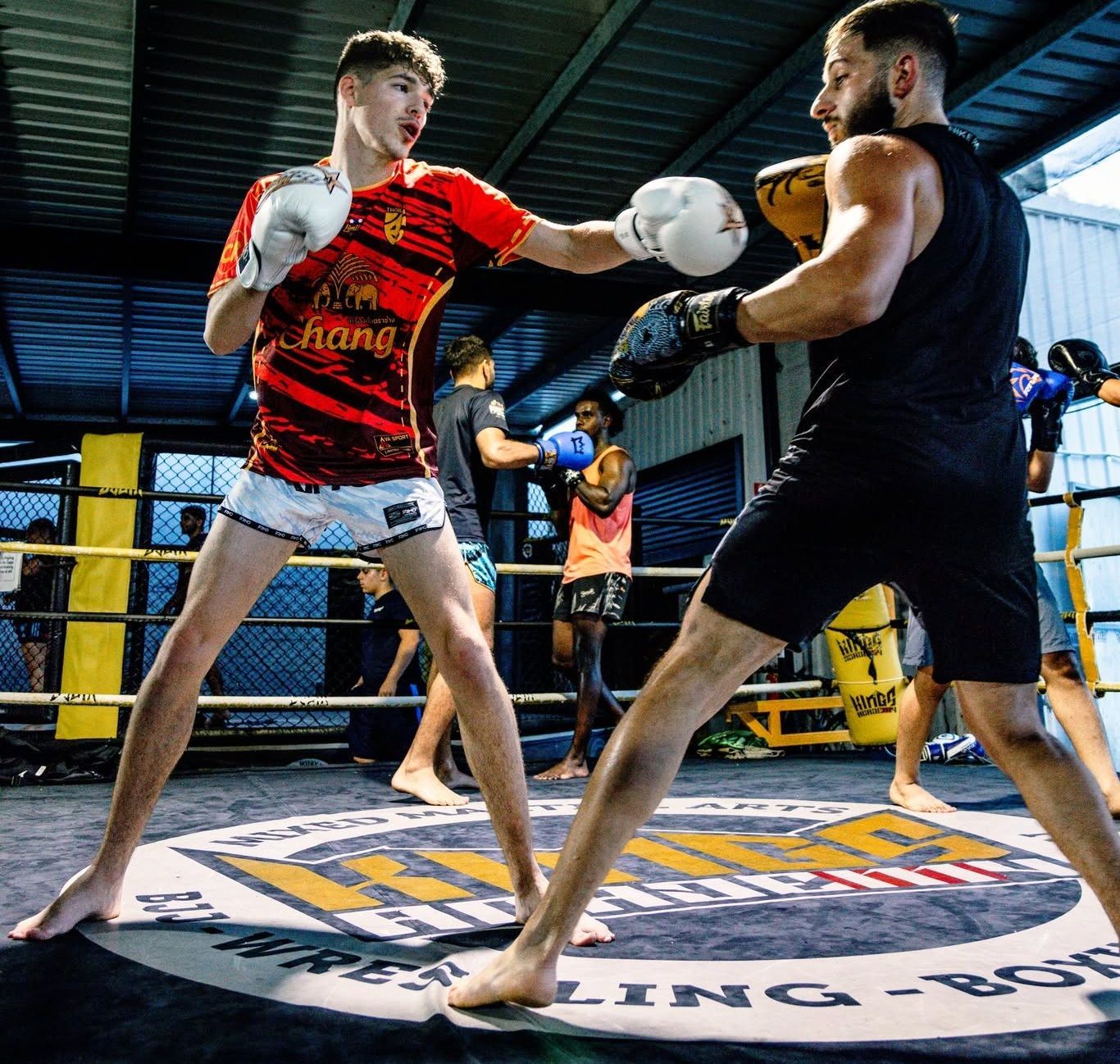
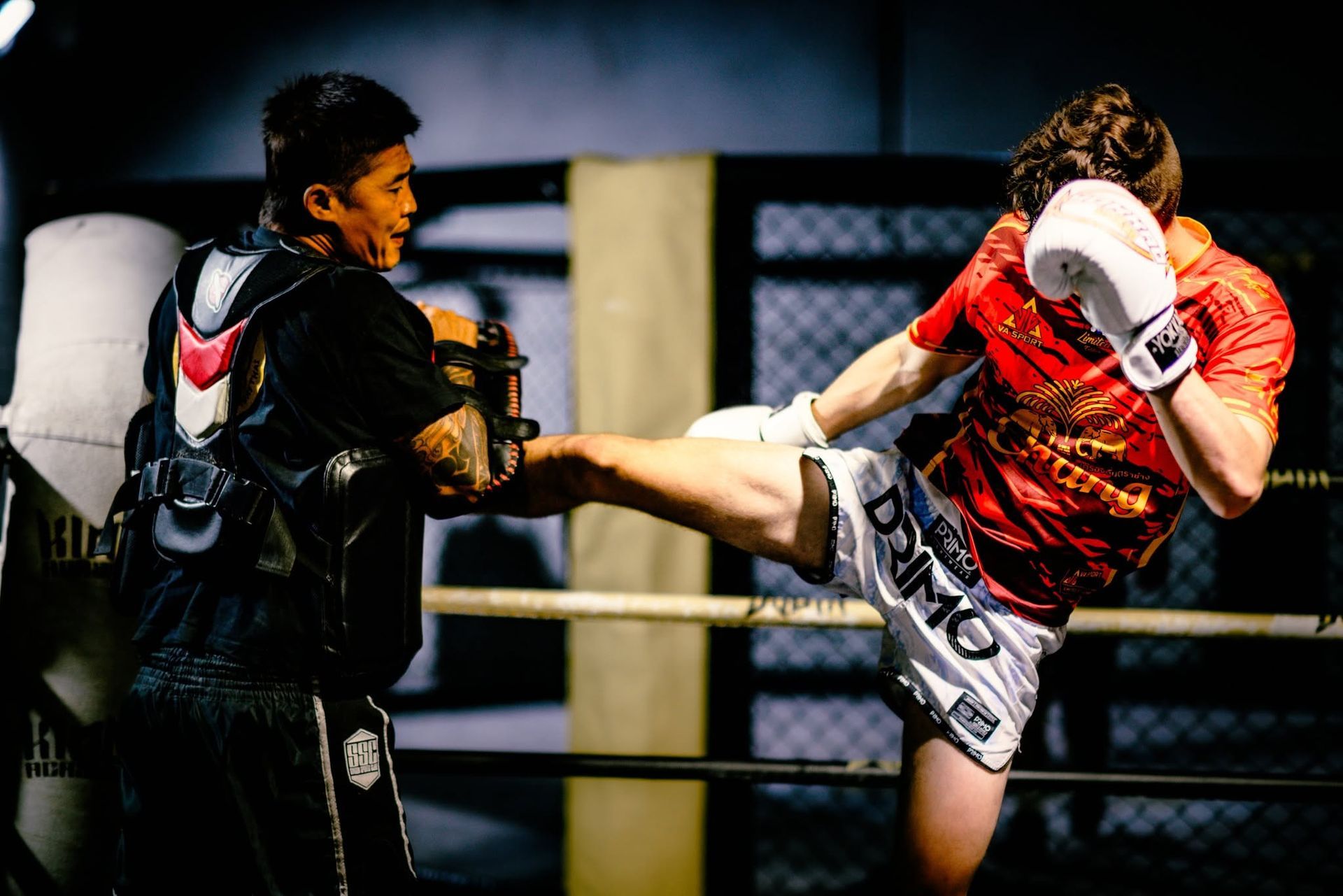
- Pad work with a holder: Thai pad rounds that mix punches, kicks, knees and elbows, and catch-and-counter drills.
- Conditioning: long rounds of pads and bag work, skipping and running, to last 5 rounds.
Training for kickboxing
- Boxing-heavy combinations: tighter hands, head movement and fast punching flurries, finished with a kick. This is the Dutch style at its core. Kings also has a Boxing program to complement your training for Kickboxing.
- Speed and output: shorter, more explosive rounds that match a 3-round fight.
- Footwork and angles: a more bladed, mobile stance to move in and out of range.
- Clinch rules: you drill the quick single knee and the break, rather than long clinch exchanges.
What's the same
Most of the foundations are shared: the roundhouse kick, the jab and cross, knees, defence, footwork and conditioning. That's why most students start by learning the core techniques that work in both, then specialise later.
How we train at Kings Academy
At Kings Academy, Muay Thai is the foundation of our striking program. Learning the full eight-limb art first gives you every tool, and it's easy to adapt to kickboxing rules later. It's much harder to go the other way.
- Classes for every age and level: Juniors (6–12) and Adults (13+), with Beginner, Intermediate and Advanced groups, each with its own instructor.
- A grading syllabus: you learn the techniques needed to progress, and your Muay Thai shirt shows your rank.
- Sparring when you're ready: it's introduced gradually, always supervised, and optional for beginners.
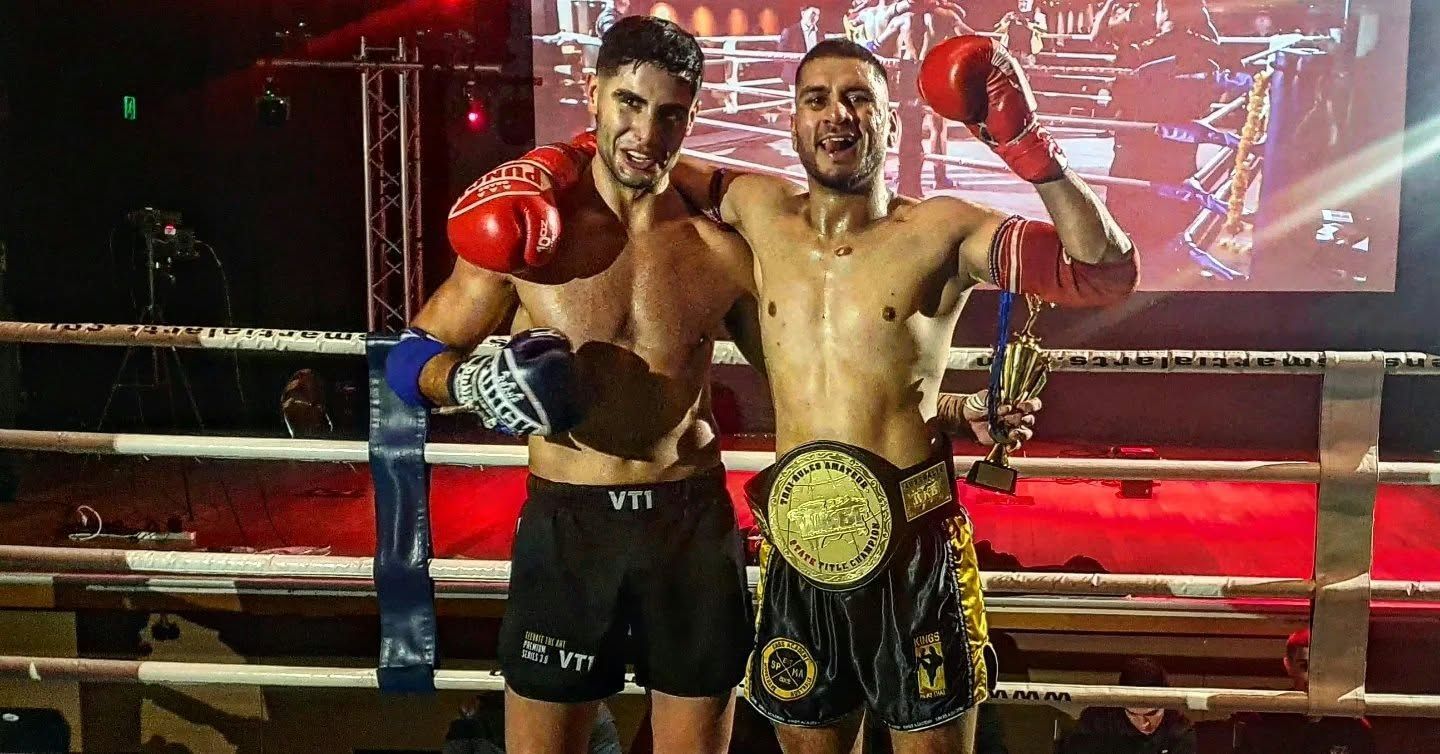
- A Fighters Class for competitors: entry is by coach recommendation. It prepares students for amateur and professional Muay Thai and for K-1 style kickboxing, covering technique, conditioning, ring strategy, weight management and fight planning.
- Purpose-built facilities: a boxing ring, a bag room and a complete conditioning setup.
You'll start with boxing gloves, shorts and hand wraps. Shin pads, a mouthguard and other protective gear come later as you progress into partner drills and sparring.
And you'll be learning under Elvis Sinosic, a UFC veteran who competed for K-1 and has coached fighters since 2000. Learn more about our Muay Thai program.
Which is right for you?
Choose Muay Thai if you want:
- The complete stand-up art, with every striking weapon and the clinch
- Practical skills for close-range self-defence
- A strong foundation for MMA, where clinch fighting and elbows are part of the game
- Tradition, culture and a martial art with centuries of history
Choose kickboxing if you want:
- Fast-paced, high-output striking with a strong boxing element
- To compete under K-1 or GLORY style rules
- To focus on range striking without the clinch and elbows
Not sure?
Start with Muay Thai. Because Muay Thai includes everything kickboxing uses, you'll learn all the fundamentals, and if you later decide to compete under kickboxing rules, our Fighters Class can prepare you for it.
Frequently asked questions
Is Muay Thai the same as kickboxing?
No. Muay Thai allows elbows and full clinch fighting with sweeps, while kickboxing (K-1 and GLORY rules) bans elbows and allows only a brief clinch for one knee or strike.
What are K-1 rules?
K-1 rules allow punches, kicks (including leg kicks) and knees, but no elbows. Fighters may clinch only briefly to throw a single knee before breaking.
Which is better for self-defence, Muay Thai or kickboxing?
Muay Thai has the edge, because elbows and clinch control are very effective at close range, where most real confrontations happen.
Which is better for fitness?
Both are excellent full-body workouts. Kickboxing training tends to be faster and more explosive, while Muay Thai adds clinch work that builds core, neck and grip strength.
Is Muay Thai or kickboxing better for MMA?
Most MMA fighters train Muay Thai because the clinch, knees and elbows translate directly to MMA. Kickboxing's boxing combinations and footwork are valuable too.
Can I switch from Muay Thai to kickboxing?
Yes. Muay Thai fighters often compete in kickboxing. You'll need to adjust to the faster pace, a more boxing-heavy style and the limited clinch.
Do I need experience or fitness to start?
No. Our Beginner classes are designed for complete beginners, and sparring is optional until you're ready.
Can kids do Muay Thai?
Yes. Our Juniors classes (6–12) teach Muay Thai in a fun, structured way that builds coordination, discipline and confidence. Read why your child should do Muay Thai.
Start your striking journey at Kings Academy
Whether you want to get fit, learn to defend yourself or step into the ring under Muay Thai or K-1 rules, the first step is the same: walk through the door and start training.
At Kings Academy in Chipping Norton, you'll learn Muay Thai and Kickboxing from coaches who have competed at elite levels, led by Elvis Sinosic, Australia's first UFC fighter. We welcome beginners from Liverpool, Moorebank, Casula, Wattle Grove and across South West Sydney.
- Learn about our Muay Thai program
- What to expect at your first Muay Thai class
- Muay Thai vs Muay Boran: 5 key differences
- Book your FREE 1 Week Trial
See you in the ring.
Published: November 20, 2026
Updated: November 20, 2026